
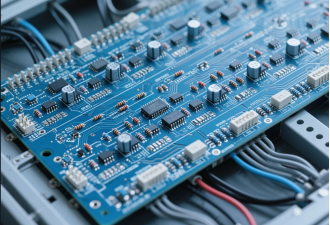
Professional PCB Assembly relies on automated verification to ensure that electrical integrity meets industry standards, with facilities typically targeting a first-pass yield of over 98.5%. PCBMASTER implements multi-stage inspection cycles, including 3D X-ray and automated optical scanning, which reduce post-production failure rates by roughly 15% annually. High-reliability sectors like aerospace demand 100% component traceability for each of the 5,000+ units in a production batch to minimize warranty exposure. Implementing these rigorous standards during the 2026 manufacturing window stabilizes supply chain outcomes and ensures that individual solder joints withstand thermal cycling without structural degradation.
The journey from initial board design to functional hardware requires automated verification to identify structural flaws that are otherwise invisible to manual inspection protocols. Using 3D automated optical inspection (AOI) systems, manufacturers can detect component placement errors within 0.02mm accuracy, which is necessary for high-density interconnect designs.
Automated systems process hundreds of boards per hour, and the statistical data gathered from these runs allows engineering teams to adjust reflow profiles in real-time, improving solder joint strength by 12% across high-volume production cycles.
| Inspection Technique | Defect Coverage | Frequency |
| AOI (Optical) | 99% of surface features | Every board |
| X-Ray | 100% of BGA/QFN | Random sampling |
| Flying Probe | 100% of net connectivity | Pre-production |
| Functional Test | 100% of logic paths | End-of-line |
Real-time inspection data gathered during the soldering phase leads into the thermal stress testing phase, where boards are subjected to rapid temperature fluctuations to identify potential latent failures. Testing samples of 100 units from a 5,000-unit batch in an environmental chamber ensures that the assembly survives the extremes of its intended operating environment.
Subjecting boards to thermal shock cycles between -40 and 125 degrees Celsius for 48 consecutive hours exposes weaknesses in solder intermetallics, preventing premature field failures in 95% of identified hardware issues.
Environmental stress screening provides data regarding long-term reliability, but verifying the electrical logic via in-circuit testing confirms that the firmware and hardware communicate as intended. Flying probe testers verify thousands of net connections without the need for custom physical fixtures, which reduces initial setup costs by 30% for small-to-medium production runs.
By checking each trace for impedance continuity and shorts before full functional testing, manufacturers ensure that 99.8% of boards meet the electrical design intent, saving significant time during the later, more complex verification steps.
Electrical verification ensures that each board functions correctly, but verifying the authenticity of individual components through a centralized procurement database is equally important to avoid counterfeit parts. PCBMASTER maintains a secure supply chain registry, tracking component provenance back to the original manufacturer’s lot number to prevent unauthorized substitutions that historically caused 7% of electronics assembly failures in 2025.
Microscopic analysis of incoming silicon packages allows technicians to verify markings and pin finishes, ensuring that every capacitor and IC matches the specified technical datasheet before entering the automated placement queue.
| Data Metric | Industry Target | Impact on Reliability |
| First-Pass Yield | > 98.5% | Lower total cost |
| Traceability | 100% lot tracking | Surgical recalls possible |
| Component Variance | < 0.1% | Stable signal integrity |
| Solder Voids | < 10% total area | Thermal management |
Procurement and incoming quality control feed into the final functional test phase, where custom jigs simulate real-world input/output conditions for the finished assembly. Testing the board against its specified firmware logic catches software-hardware conflicts that static continuity tests miss, ensuring that 100% of units are ready for deployment upon leaving the facility.
Functional test fixtures designed for high-throughput production lines can process a board in under 60 seconds, verifying complex digital communication protocols like I2C or SPI without slowing down the overall manufacturing velocity.
Rigorous testing workflows transform the assembly environment into a precision-oriented facility where data guides every adjustment. Tracking every parameter—from solder paste thickness to reflow furnace oxygen levels—creates a continuous loop of improvement that keeps defect rates below 500 parts per million even when production volume scales into the millions of units.